»Kalküle und Representation« Zusatzpaket
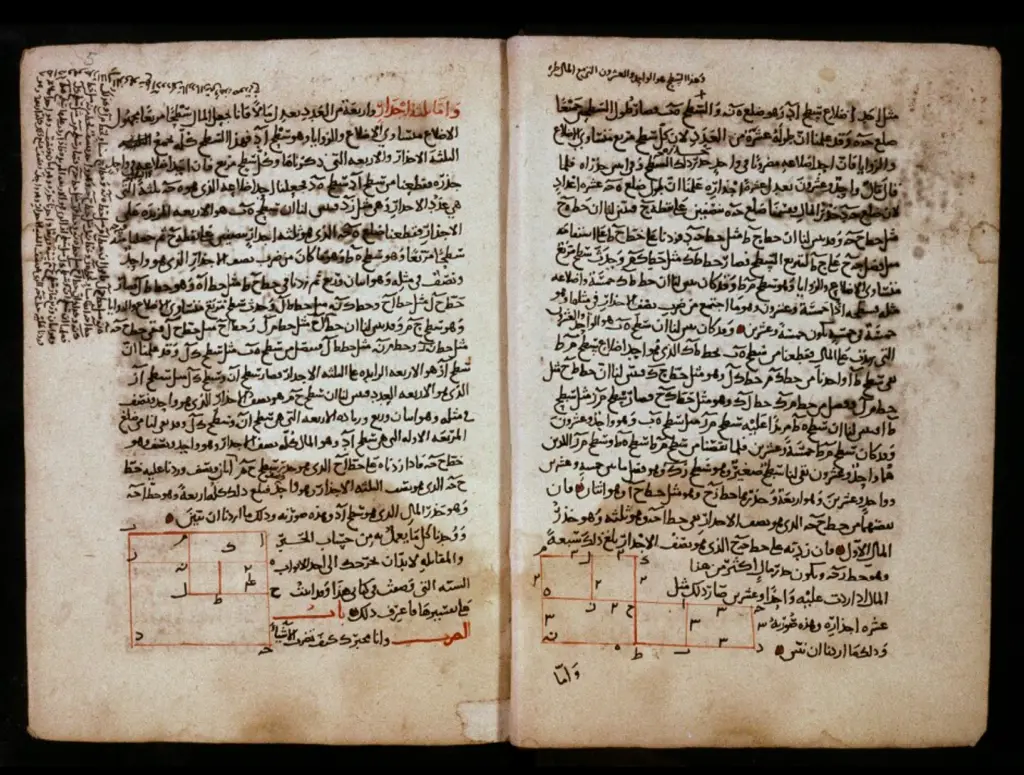
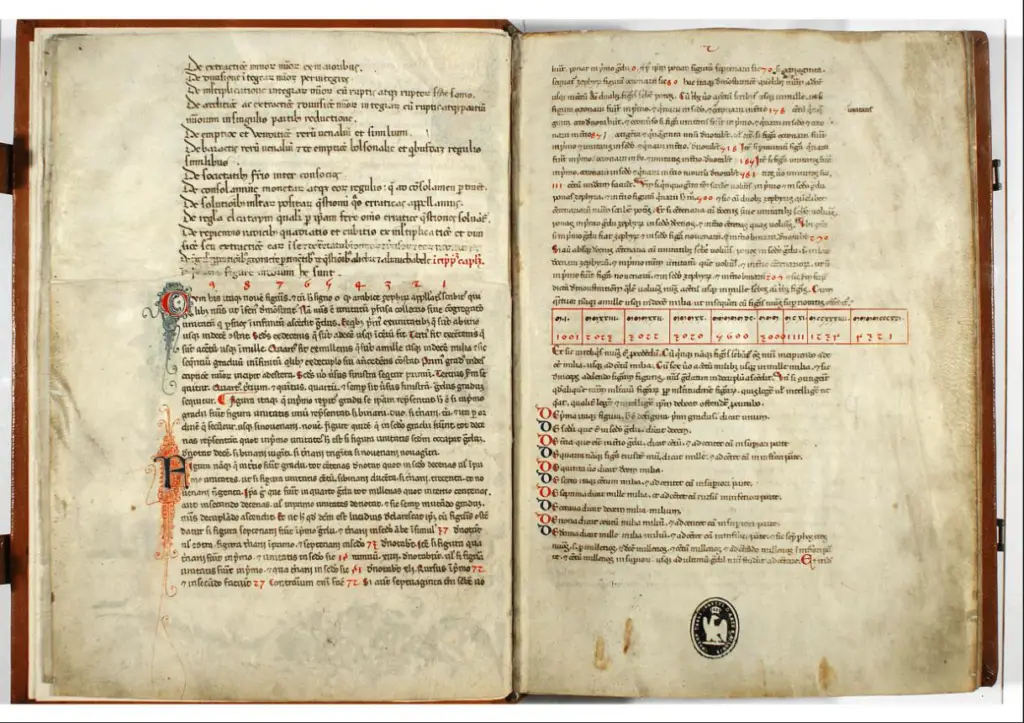
Der globale Standard der Mathematik ist das indisch-arabisches Zahlensystem, das Werte durch Folgen von zehn Ziffern ausdrückt:0, 1, 2, 3, 4, 5, 6, 7, 8, 9
Es ist ein Stellenwertsystem zur Basis 10 [Radix].Das bedeutet: Jede Ziffer repräsentiert einen Wert relativ zu einer Zehnerpotenz.
Der Wert einer Ziffer hängt von ihrer Stelle in der Folge ab: 432 zum Beispiel:
400 = 4 x 100
30 = 3 x 10
2 = 2 x 1
Mengen sind nicht mehr an sichtbare Gruppierungen gebunden, einen Steinhaufen, eine Reihe von Markierungen, sondern werden durch abstrakte Beziehungen zwischen Zeichen ausgedrückt.
Das mag intuitiv erscheinen, ist aber nicht die einzige Möglichkeit, ein Zahlensystem aufzubauen, und es war auch nicht immer das vorherrschende.Was ein Zahlensystem vor allem ermöglicht, ist die Behandlung von Zahlen als rein symbolische Relationen und nicht als Repräsentationen gezählter Objekte.
Mengen sind nicht mehr an sichtbare Gruppierungen gebunden, einen Steinhaufen, eine Reihe von Markierungen, sondern werden durch abstrakte Beziehungen zwischen Zeichen ausgedrückt.
Dies ermöglicht es dem Dezimalsystem, von der alltäglichen Arithmetik bis zur Berechnung astronomischer Entfernungen zu skalieren, ohne seine zugrundeliegende Logik zu verändern.
Sybille Krämers Argument ist: Das arabische Zahlensystem vereinfachten das Rechnen, weil sie einen begrenzten Satz von Symbolen darstellen, die sich in vorhersehbaren Positionsmustern wiederholen.
Es gibt keine Mehrdeutigkeit darüber, ob sie Phoneme [Stimmlaute] oder Mengen repräsentieren. Die operative Kraft der arabischen Ziffern ist zum Teil eine Funktion ihrer Trennung von der Sprache.
CALCULATOR
Sumerian numeral calculator
ERKLÄRUNG
The archaic Sumerian numeral system, used in Uruk-period proto-cuneiform tablets from around 3,200 BCE, is one of the earliest written number systems in human history.
The Sumerian system uses seven distinct signs, each with a fixed value:1, 10, 60, 600, 3,600, 36,000, and 216,000.
Each represents a step in a series of alternating multiplications of 10 and 6:
1
10 x 1 = 10
6 x 10 = 60
10 x 60 = 600
6 x 600 = 3600
10 x 3600 = 36000
6 x 36000 = 216000
The numeral system organizes around the relationship between 10 and 6. The product 60 has an unusually large number of divisors:
1, 2, 3, 4, 5, 6, 10, 12, 15, 20, 30, 60.
This is convenient if you frequently need to split quantities evenly, for example: grain rations or plots of land, and for more abstract quantities like time and the geometric area of a circle.
CALCULATOR
Greek milesian numeral calculator
ERKLÄRUNG
In the Milesian system, the ancient Greeks used 27 letters of their alphabet to represent numbers.
The first nine letters
α, β, γ, δ, ε, ϛ, ζ, η, θ
stood for 1–9.
The next nine
ι, κ, λ, μ, ν, ξ, ο, π, ϟ
stood for 10–90,
and the last nine
ρ, σ, τ, υ, φ, χ, ψ, ω, ϡ
stood for 100–900.
To write a number, you simply combined the appropriate symbols additively
365 was written
τξε (300 + 60 + 5).
For thousands, a small mark (a keraia) was placed before a letter to multiply its value by 1,000, so ͵α meant 1,000.
CALCULATOR
Mayan numeral calculator
ERKLÄRUNG
The Mayan numeral system developed around 100-400 BCE with influences from the earlier Olmec civilization. The system was fully normalized by the 4th c. CE and was in use through the 16th c.
The system has a base of 20, with dots and bars representing
1: •
5: ⏤
0: a stylized shell shape.
Numbers from 1 to 19 were written by stacking dots and bars vertically.
Above 19, another position is added to the top of the sequence representing multiples of 20.
2. level •: 2 x 20 = 40
1. level •: 1 x 20 = 20
0. level •: 1